

Golf Cart and Moped Accidents in Myrtle Beach: Who Is Liable and What Is a Claim Worth?
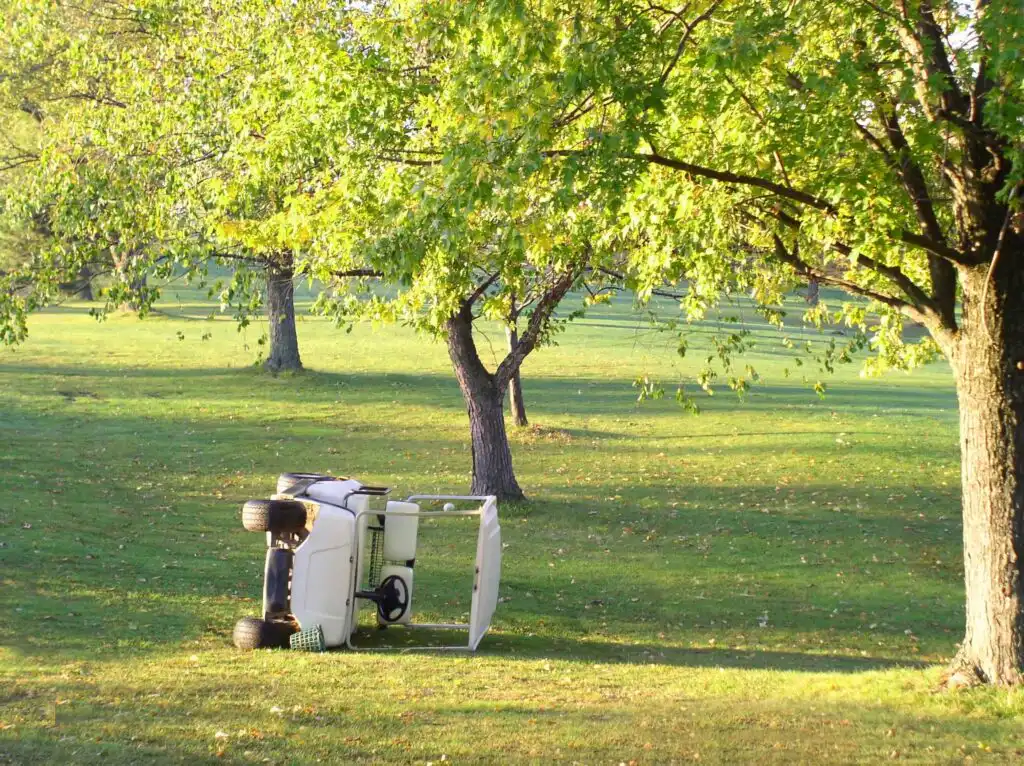
An overturned golf cart illustrates the potential risk of serious injuries in a rollover accident.
Golf carts and mopeds are part of everyday life in Myrtle Beach. Visitors rent them to get around near the beach, families use golf carts in residential communities, and moped riders rely on them for affordable transportation.
They may look less dangerous than full-size vehicles, but a collision can leave a rider or passenger with serious injuries. Golf carts provide little protection during a rollover, while moped riders are almost entirely exposed when struck by a car.
After a crash, the questions usually come quickly. Who is responsible? Does the rental company share the blame? What if the golf cart driver broke a traffic rule? How much could the injury claim be worth?
The answers depend on the available evidence, the parties involved, and the severity of the injuries. A golf cart accident lawyer in Myrtle Beach can investigate the crash, identify potentially responsible parties, and help preserve important evidence before it is lost.
Schedule a Consultation(opens in new tab)
Who Can Be Liable for a Myrtle Beach Golf Cart Accident?
Liability generally depends on negligence. In plain language, negligence means someone failed to use reasonable care, and that failure caused another person’s injuries.
A Myrtle Beach golf cart accident may involve one responsible party or several.
The Golf Cart Driver
A golf cart driver may be liable for:
- Failing to yield
- Turning into traffic without checking for vehicles
- Driving while distracted
- Carrying more passengers than the cart was designed to hold
- Allowing passengers to hang from the side
- Speeding for the conditions
- Driving while impaired
- Operating the cart where or when local law prohibits it
- Allowing an unlicensed or underage person to drive
Even at relatively low speeds, a sharp turn or sudden stop can throw an unrestrained passenger from a golf cart.
The Driver of a Car or Truck
Sometimes the golf cart operator obeys the rules, but a regular motor vehicle driver causes the crash. A driver may be responsible after:
- Rear-ending a golf cart
- Passing without enough clearance
- Running a red light or stop sign
- Failing to notice a golf cart in an intersection
- Driving while texting
- Driving under the influence
- Opening a vehicle door into the cart’s path
A driver cannot disregard a golf cart simply because it is smaller or moving slowly. Everyone using the road still has a duty to operate with reasonable care.
A Golf Cart or Moped Rental Business
Rental businesses may share liability when their negligence contributes to an accident. Possible issues include:
- Renting to someone who is not legally permitted to drive
- Failing to perform reasonable maintenance
- Providing a vehicle with defective brakes, tires, steering, or lights
- Failing to disclose a known safety problem
- Giving inadequate operating instructions
- Continuing to rent a vehicle after earlier reports of a defect
A rental waiver does not automatically excuse a company from responsibility for its own negligent conduct. The wording of the agreement and the facts surrounding the crash must be reviewed.
The Golf Cart Owner
An owner who lends a cart to another person may face questions about negligent entrustment. For example, an owner might knowingly allow an unlicensed teenager, an impaired adult, or someone unfamiliar with the vehicle to drive.
Ownership alone does not establish liability. The investigation must determine who had possession of the cart, who was driving, what the owner knew, and how the accident occurred.
A Property Owner or Community Association
Some accidents are connected to dangerous property conditions rather than driver behavior. Poor lighting, hidden intersections, missing signs, obstructed sightlines, or unsafe private paths may contribute to a collision.
Depending on who controlled the property, a resort, hotel, business, homeowners association, or another property owner could be involved in the claim.
A Manufacturer or Repair Company
A mechanical failure can turn a routine trip into a serious accident. Defective brakes, steering components, tires, seat belts, or acceleration systems may point toward a manufacturer, parts supplier, or repair business.
Preserving the vehicle is especially important when a defect is suspected. Repairing or disposing of the golf cart too soon could destroy evidence needed to determine why it failed.
What Are South Carolina’s Golf Cart Rules?
Golf cart laws matter because a violation may become evidence in a liability investigation. However, violating a rule does not automatically answer every question about fault.
According to the South Carolina Department of Public Safety(opens in new tab), golf carts operated on public roads generally must:
- Be insured, permitted, and registered with the South Carolina Department of Motor Vehicles
- Carry proof of registration and liability insurance
- Be operated by someone who is at least 16 and has a valid driver’s license
- Remain within four miles of the address on the registration certificate or a qualifying gated-community entrance
- Travel only on eligible roads with posted speed limits of 35 mph or less
- Have children under 12 secured with a seat belt on public streets and highways
South Carolina law previously limited golf cart operation to daylight hours statewide. Effective May 22, 2025, local and county governments may set certain hours, methods, and locations for golf cart use. The statewide restriction limiting operation to roads with speed limits of 35 mph or less remains.
That makes local rules important. A driver should check the ordinance that applies within the City of Myrtle Beach, North Myrtle Beach, Surfside Beach, or the relevant part of Horry County.
How Are Moped Accidents Different?
Moped claims can involve many of the same liability questions as motorcycle and bicycle crashes, but South Carolina treats mopeds differently in several important ways.
The South Carolina Department of Public Safety(opens in new tab) states that mopeds must be registered and display a license plate. A title is optional, and South Carolina does not require moped owners to carry liability insurance. Riders must be at least 15 to obtain a moped license, and riders under 21 must wear a helmet.
The lack of mandatory moped insurance can complicate a claim. If a moped operator causes an accident and has no applicable coverage or assets, an injured person may need to investigate other sources of compensation.
Possible sources may include:
- The insurance covering another involved vehicle
- Uninsured or underinsured motorist coverage
- A commercial policy if the at-fault person was working
- A rental company’s insurance
- A claim against a business, property owner, or another responsible party
A vehicle advertised as a “moped” may also legally qualify as a motorcycle depending on its design, engine capacity, and speed. Correctly classifying the vehicle can affect licensing, registration, and insurance questions.
What If More Than One Person Is at Fault?
Golf cart and moped accidents are rarely as simple as one person being completely responsible.
A cart driver might make an unsafe turn while a car driver is speeding. A moped rider might fail to use a signal, but the other driver may have been looking at a phone. A passenger may be injured after a rental company provides a cart with worn brakes and the operator also drives carelessly.
South Carolina follows modified comparative negligence. Under the rule adopted by the South Carolina Supreme Court, an injured person may recover if their negligence is not greater than the defendant’s negligence. Compensation is reduced according to the injured person’s percentage of fault. If the injured person is found more than 50 percent responsible, recovery may be barred.
A Simple Comparative-Fault Example
Suppose an injured passenger has $100,000 in proven damages. A jury finds the passenger 20 percent responsible because the passenger knowingly rode in an unsafe position.
The recoverable amount could be reduced by 20 percent, leaving $80,000.
This is only an illustration. Real cases depend on the admissible evidence, available insurance, applicable law, and specific damages. You can read the South Carolina Supreme Court’s explanation of comparative negligence in Nelson v. Concrete Supply Company(opens in new tab).
Insurance companies may use alleged traffic violations, alcohol consumption, seating position, or helmet use to shift blame. That is one reason to avoid guessing about fault or giving a recorded statement before understanding your rights.
What Is a Golf Cart or Moped Accident Claim Worth?
There is no responsible way to assign an accurate value from the vehicle type alone. A golf cart accident that causes minor bruising will be valued differently from a rollover that causes surgery, permanent impairment, or a traumatic brain injury.
The value of a claim may include economic and non-economic damages.
Medical Expenses
Recoverable medical costs may include:
- Ambulance transportation
- Emergency room care
- Hospitalization
- Diagnostic imaging
- Surgery
- Medication
- Physical therapy
- Follow-up appointments
- Assistive equipment
- Future medical treatment
Future expenses generally require medical support showing that the care is reasonably expected.
Lost Income and Reduced Earning Ability
An injured person may seek compensation for wages lost while recovering. When an injury prevents the person from returning to the same occupation or working the same hours, the claim may also include diminished earning capacity.
Employment records, tax documents, medical restrictions, and vocational evidence may help establish these losses.
Pain, Suffering, and Loss of Normal Life
Not every loss comes with a receipt. A claim may account for physical pain, emotional distress, scarring, disability, sleep disruption, and loss of enjoyment of normal activities.
The severity and duration of the injury matter. So does the effect on the person’s actual daily life.
Property Damage and Related Expenses
The claim may include damage to a moped, personal belongings, or another vehicle. Transportation expenses and other reasonable out-of-pocket costs may also be relevant.
Wrongful Death Damages
If a golf cart or moped accident is fatal, eligible family members may have a wrongful death claim. These cases require careful investigation of fault, financial losses, funeral expenses, and the personal losses suffered by the family.
No prior settlement or verdict guarantees what another case will be worth. Each claim must be evaluated individually.
Two Examples of How Case Value Can Change
These hypothetical examples show why similar-looking accidents can lead to very different claims.
Example 1: A Rental Golf Cart With Faulty Brakes
A family rents a golf cart near the beach. The brakes fail as the driver approaches an intersection, and a passenger is thrown from the cart. Maintenance records indicate that a previous customer reported braking problems.
The rental company’s notice of the defect could become important evidence. The claim’s value would depend on the passenger’s injuries, treatment, lost income, future needs, insurance coverage, and any fault assigned to other parties.
Example 2: A Moped Rider Hit by a Distracted Driver
A licensed moped rider travels through an intersection with the right of way. A driver looking at a phone turns across the rider’s lane. The rider suffers fractures requiring surgery and cannot work for several months.
Phone records, intersection video, witness statements, medical documentation, and employment records could support the claim. If the driver disputes the traffic signal or alleges that the moped was speeding, accident reconstruction evidence may become important.
What Should You Do After a Golf Cart or Moped Crash?
Your health comes first. After receiving emergency assistance, take reasonable steps to preserve information.
- Call law enforcement. Ask for an official crash investigation.
- Get medical attention. Some head, neck, and soft-tissue injuries become noticeable later.
- Photograph the scene. Include the vehicles, road, signs, lighting, skid marks, debris, and visible injuries.
- Identify witnesses. Get names and contact information before people leave.
- Save rental records. Keep agreements, receipts, messages, inspection forms, and advertisements.
- Preserve the vehicle. Do not authorize repairs when a mechanical failure may have contributed.
- Avoid social media posts. Insurers may interpret photographs or comments out of context.
- Do not accept a quick settlement without reviewing it. A release may end the claim before the full medical picture is clear.
- Speak with an attorney promptly. Video, electronic data, rental records, and witness memories may not remain available indefinitely.
If someone left without providing identifying or insurance information, review our guide on what happens when drivers do not exchange information after a South Carolina accident(opens in new tab). Visitors may also find our article about accidents involving out-of-state drivers in Myrtle Beach(opens in new tab) helpful.
How Long Do You Have to File a Claim?
South Carolina generally allows three years for many personal injury actions under Section 15-3-530 of the South Carolina Code(opens in new tab). Different deadlines may apply when a government entity is involved, when the injured person is a minor, or when another legal exception applies.
Waiting until the deadline approaches can weaken an otherwise valid case. Surveillance footage may be overwritten, rental records may be lost, and witnesses may become difficult to locate.
Why Local Experience Matters
Myrtle Beach presents accident conditions that are not identical to those in every South Carolina community. Seasonal traffic, unfamiliar visitors, rental vehicles, busy pedestrian areas, and the frequent use of golf carts and mopeds can all affect an investigation.
Robert Sansbury leads Sansbury Law Firm, representing injured individuals and families in Myrtle Beach and surrounding South Carolina communities.
Robert is a Myrtle Beach native who earned his Juris Doctor from the University of South Carolina School of Law in 2008. Before founding Sansbury Law Firm, he served as a judicial law clerk in South Carolina’s Ninth Judicial Circuit and worked in insurance defense.
He is admitted to practice in South Carolina state and federal courts, including the U.S. Court of Appeals for the Fourth Circuit. He is also a certified circuit court mediator, past president of the Horry County Bar, and former member of the South Carolina Association for Justice Board of Governors. Robert holds an AV Preeminent peer-review rating from Martindale-Hubbell and received Super Lawyers recognition for 13 consecutive years, from 2014 through 2026.
Talk With a Golf Cart Accident Lawyer in Myrtle Beach
A golf cart or moped crash may involve traffic laws, rental agreements, maintenance records, insurance exclusions, and competing accounts of what happened. Identifying every responsible party can make a significant difference, especially when one source of insurance is limited or unavailable.
At Sansbury Law Firm, a personal injury law firm serving Myrtle Beach(opens in new tab), we help injured people understand their options and the evidence that may affect their claims. We can review how the accident occurred, identify potential sources of compensation, and explain what factors may influence the value of the case.
If you or a loved one was injured in a golf cart or moped accident, speak with a golf cart accident lawyer in Myrtle Beach about your legal options.
Call Sansbury Law Firm at (843) 315-9945 to schedule a consultation(opens in new tab)
Every case is different, and past results do not guarantee a similar outcome. Speaking with the firm does not create an attorney-client relationship unless a representation agreement is signed.